Business Succession Planning & Management
Protect the business you built — and the people who depend on it
Every business will change hands one day. The only question is: will that transition be smooth… or chaotic? Succession planning isn’t just for retirement. It’s for accidents. Illness. Disputes. Unexpected exits.
What You'll Learn
- Your family
- Your shareholders
- Your employees
- Your legacy
- Leadership preparation
- Governance continuity
Management

Protect the business you built — and the people who depend on it.
Every business will change hands one day.
The only question is:
Will that transition be smooth… or chaotic?

Succession planning isn’t just for retirement.
It’s for accidents. Illness. Disputes. Unexpected exits.
It’s about continuity.
Stability.
And long-term survival.
Done right, it protects:
- Your family
- Your shareholders
- Your employees
- Your legacy
Let’s break it down.
A strong succession plan is grounded in knowing your business net worth and valuation.
Index with a curated Marketplace and a comprehensive Wealth Builder Course to

ensure you have the data—and the skills—to act on it.
Business succession planning is the structured process of preparing your business
for a change in ownership, leadership, or control.
It answers three critical questions:
1️⃣ Who will run the business?
2️⃣ Who will own the business?
3️⃣ How will the transition happen legally and financially?
Succession management goes beyond simply “naming a replacement.”

It involves:
- Leadership preparation
- Governance continuity
- Legal documentation
- Tax planning
- Estate planning
- Risk mitigation
In simple terms:
Succession planning ensures your business survives you.
Whether you:
- Retire
- Exit
- Sell
- Become incapacitated
- Or pass away unexpectedly
Without a plan, transitions become reactive.
With a plan, transitions become strategic.
Why It Matters

A business without succession planning faces:
- Operational disruption
- Ownership disputes
- Tax shocks
- Legal battles
- Value erosion
- Family conflict
Succession planning protects:
- Business continuity
- Enterprise value
- Shareholder interests
- Employees’ livelihoods
- Family wealth
It’s not just a legal exercise.
It’s a stability strategy.
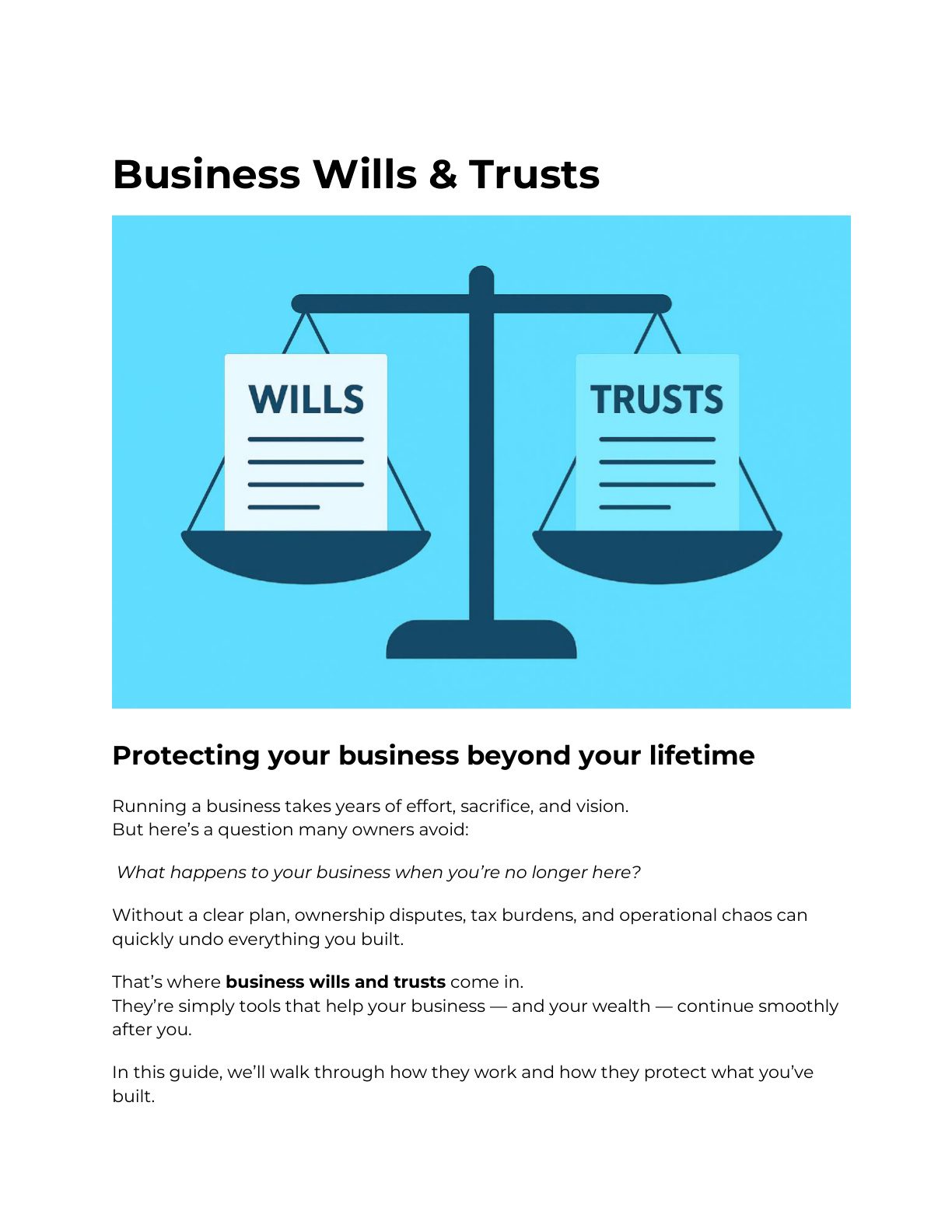
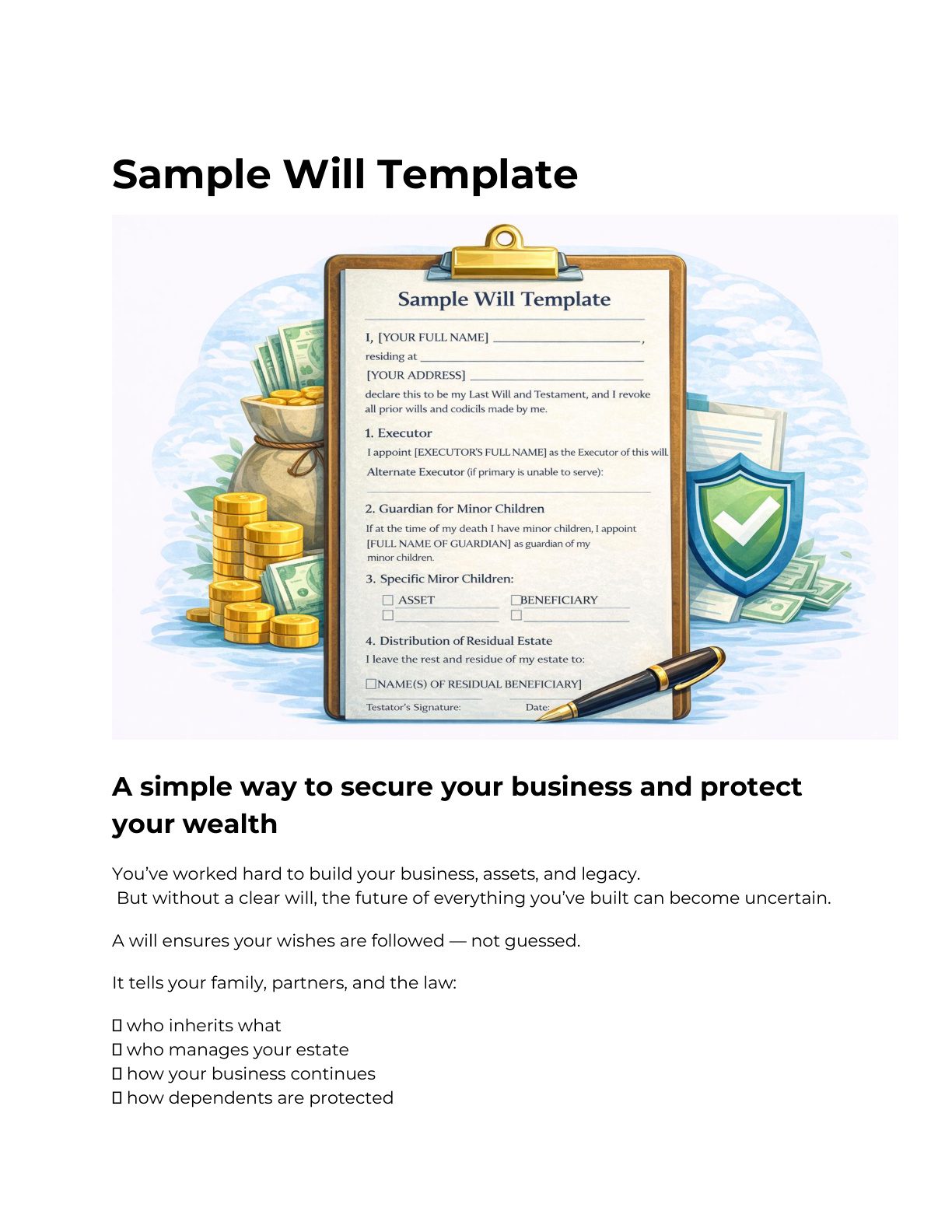
Protect business value with complementary business will writing and trusts.
Succession Planning vs Succession Management

There’s a subtle difference.
Succession Planning
Designing the roadmap.
Succession Management

Actively developing and preparing successors over time.
Planning is the document.
Management is the execution.
Strong businesses do both.
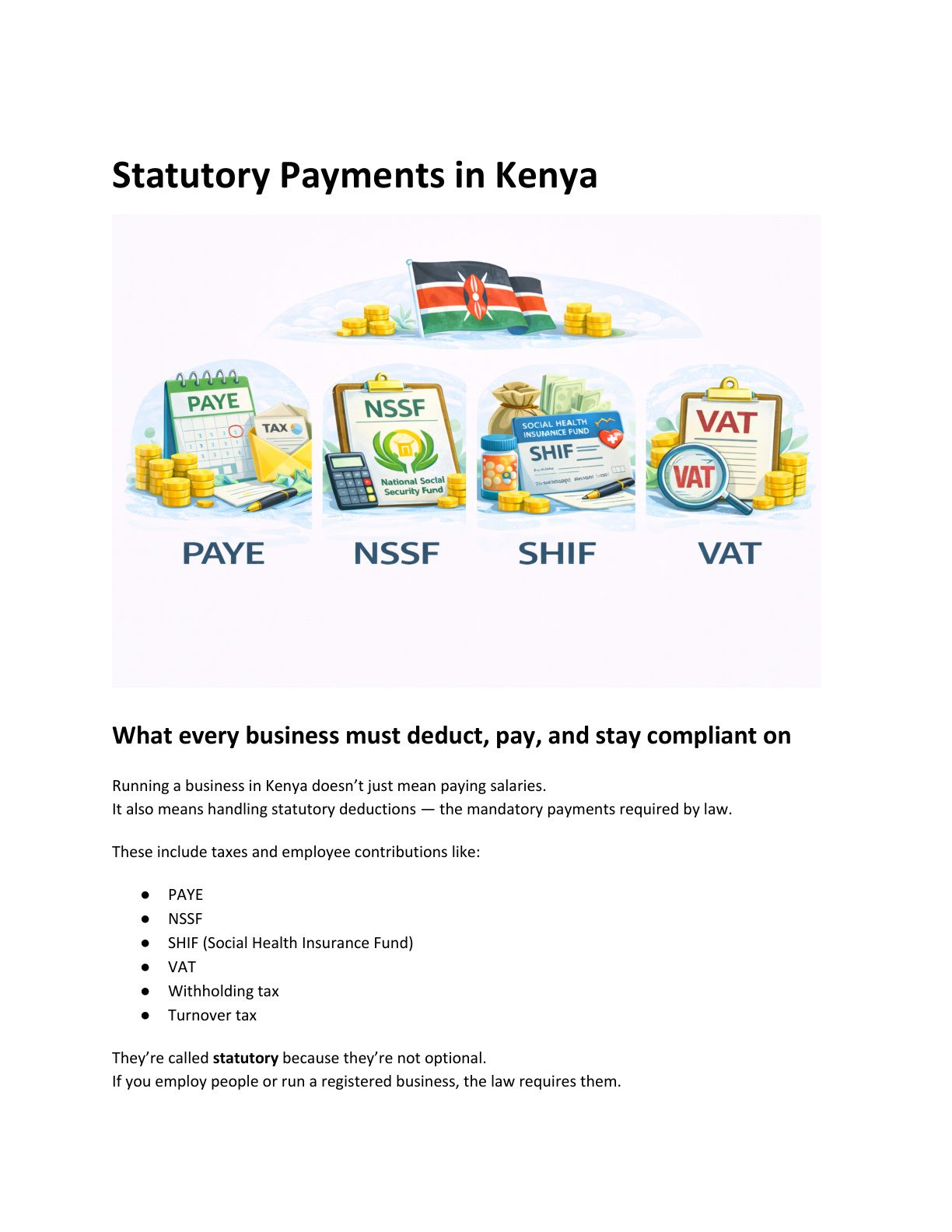
Ensure statutory compliance is part of your succession plan — see statutory payments in Kenya.
Two Types of Succession Planning

Succession planning falls into two major categories:
1️⃣ Emergency Succession (Death or Accident
Planning)
This covers worst-case scenarios.
If something unexpected happens:
- Who runs the business tomorrow?
- Who signs cheques?
- Who makes payroll decisions?
- Who controls ownership?
Without a plan, operations can freeze.
Legal disputes can erupt.
Tax issues can surface.
Family conflict can intensify.
Emergency succession ensures immediate continuity.
2️⃣ Planned Transition (Retirement or Exit)
This is gradual.
You step back.
Someone steps up.
Knowledge transfers.
Leadership transitions.
The goal:
Preserve value while shifting control.
A structured transition increases:
- Business stability
- Investor confidence
- Enterprise value
Board Succession Planning

Governance continuity matters.
Board succession planning focuses on the board of directors — including the
chairperson.
Serrari Marketplace connects businesses with financial and advisory services to support transition planning.
It ensures leadership at the governance level remains strong, stable, and

strategically aligned.
Without it:
- Boards can lose direction.
- Oversight weakens.
- Strategic execution suffers.
Speak with a Serrari advisor to build a tailored business succession strategy.